
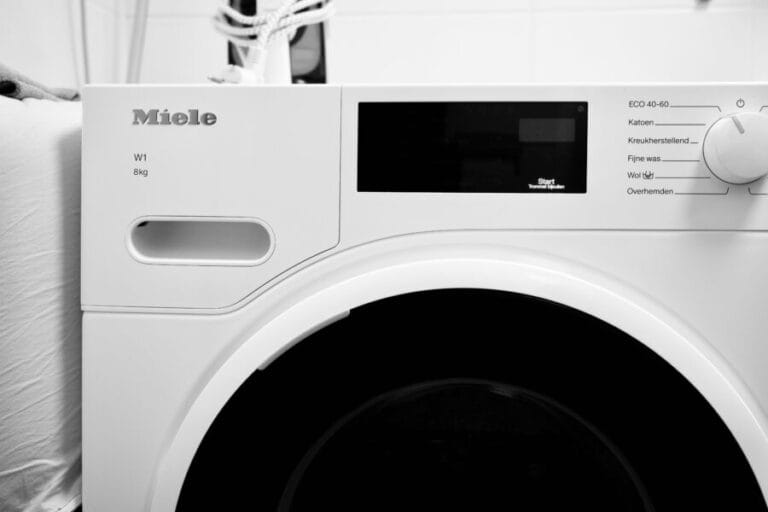

Miele washing machines last 15 to 20 years in typical residential settings. This is one of the longest average lifespans in the consumer appliance market. Field data from technicians, long-term owner reports, and teardown analysis consistently place Miele well above mainstream brands in durability.
Miele designs washers to handle far more cycles than average household demand. While many brands design around 3,000 to 5,000 cycles, Miele targets much higher internal cycle testing, which directly affects bearing life, motor longevity, and structural fatigue. Miele washer lifespan compares well to other premium brands such as Speed Queen and Asko.
Lifespan by Miele Washer Type
Miele focuses almost exclusively on front-load designs, but lifespan still varies slightly by platform and usage.
| Miele Washer Type | Expected Lifespan | Notes on Durability |
|---|---|---|
| Standard residential front-load | 15 to 20 years | Steel outer tubs, long-life bearings |
| Compact front-load units | 14 to 18 years | Smaller drums, slightly higher wear |
| Stackable washer-dryer sets | 15 to 20 years | Shared design philosophy, low vibration |
| Entry-level Miele models | 14 to 18 years | Fewer features, same core mechanics |
Even Miele’s smaller units tend to outlast full-size machines from many competitors due to reduced vibration and conservative spin profiles.
Common Miele Washer Models and Longevity
Across service records, several Miele families show consistent long-term reliability:
- Miele Classic washers often run for decades with minimal intervention.
- Miele W1 series models are known for quiet operation and stable bearings.
- Compact Miele washers used in apartments still frequently exceed 15 years when loads are kept reasonable.
Model complexity affects electronics more than mechanics. Machines with advanced dosing systems and connectivity features may see control-related repairs earlier, while the core wash system remains intact.
Why Miele Washers Last Longer
Miele washers are engineered differently than mass-market machines.
Heavy-gauge steel frames reduce flexing during spin cycles. Oversized bearings run under lower stress. Motors are tuned for smooth torque delivery rather than aggressive acceleration. Even the suspension systems are designed to absorb vibration instead of relying on lightweight counterweights.
From a technician standpoint, fewer shock loads mean fewer cracked tubs, fewer worn bearings, and less fatigue on wiring harnesses over time.
Factors That Can Shorten Lifespan
Despite their durability, Miele washers are not immune to misuse.
Consistently overloading the drum increases bearing and spider wear. Using excess detergent leads to residue buildup in pressure systems and drain paths. Poor ventilation accelerates moisture-related issues on door seals and electronic boards.
Hard water can also shorten component life if machines are never descaled, particularly affecting inlet valves and internal flow sensors.
Maintenance That Extends Miele Washer Life
Owners who reach the 20-year mark tend to follow similar habits:
- Periodic cleaning cycles to remove detergent and mineral buildup
- Sensible load sizes, especially with heavy fabrics
- Allowing the door seal to dry between uses
- Addressing minor leaks or noises early
Technicians often note that Miele washers rarely fail suddenly. Most issues develop slowly and give ample warning before major damage occurs.
Repair Costs Over a Long Lifespan
Miele repairs are less frequent but often more expensive when they occur. Parts availability is good, but pricing reflects the premium build.
| Symptom | Typical Repair | Part Cost | Total Cost With Labor |
|---|---|---|---|
| Loud bearing noise | Drum bearing replacement | $200 to $400 | $600 to $1,200 |
| Won’t drain | Drain pump replacement | $80 to $160 | $250 to $400 |
| Door won’t lock | Door lock assembly | $90 to $180 | $220 to $350 |
| Error codes or no power | Control board repair or replacement | $250 to $500 | $500 to $900 |
Because of the long remaining lifespan, repairs that would not make sense on a 10-year-old washer are often justified on a 15-year-old Miele.
When Replacement Makes Sense
Replacement usually becomes reasonable once a Miele washer passes 20 years or suffers multiple major failures at once. Bearing failures combined with control issues can exceed the practical value of repair, even for a premium machine.
That said, many owners choose repair well past the point they would replace other brands.
Miele Lifespan Compared to Other Brands
Miele washers sit at the top of the residential market for longevity. They typically outlast mainstream brands by 5 to 10 years and still hold an advantage over most premium competitors.
Their downside is upfront cost and repair pricing. The tradeoff is fewer service calls and a much longer usable life. The same goes for Miele vacuums, check out our guide here.
FAQ
How long do Miele washing machines last?
Most Miele washers last between 15 and 20 years, with some exceeding that range under moderate use.
Are Miele washers worth the higher price?
For households planning long-term ownership, the extended lifespan often offsets the higher purchase price.
Do Miele washers break less often?
Yes. Failures are less frequent, but repairs can be more expensive when they occur.
Is it worth repairing an old Miele washer?
Repairs are often worthwhile well into the second decade of ownership due to the machine’s remaining service life.
How Technicians Evaluate an Aging Miele Washer
A technician typically evaluates bearing noise, spin stability, motor performance, and control responsiveness to assess remaining life. Any internal inspection or electrical testing begins with disconnecting power. Gradual increases in vibration or recurring error codes usually indicate wear that should be addressed before secondary damage occurs.