

Lifespan Overview
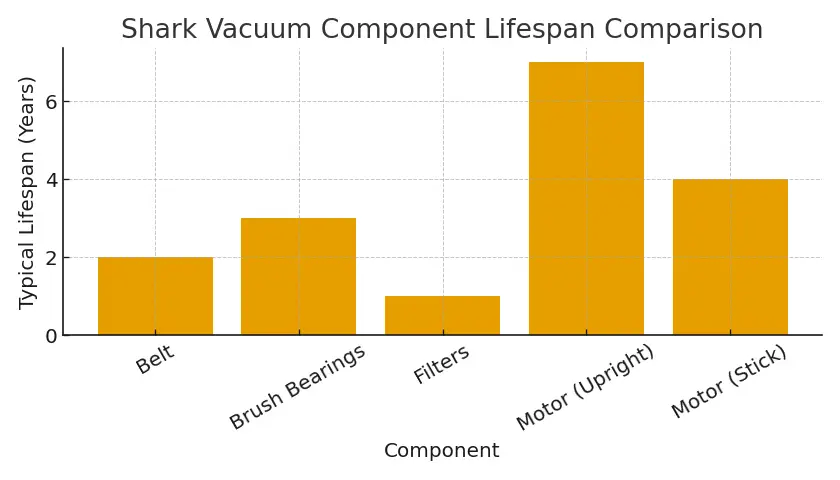
Many Shark uprights stay in service for 5 to 8 years, depending on use intensity. Homes with pets or heavy carpet tend to see shorter lifespans, while light-duty environments can push these machines closer to the upper end. Their stick models usually wear out sooner because the motor runs hotter and the brush system is smaller.
Shark vacuum lifespan is similar to that of vacuums from Bissell. Expected longevity is estimated by tracking recurring failure modes across user reviews, technician forums, and service literature.
Quick Summary
| Category | Summary |
|---|---|
| Typical Lifespan | 5 to 8 years |
| Longer-Lasting Models | Uprights with routine filter and brush maintenance |
| Shorter-Lived Models | Stick vacuums due to motor heat and compact brush systems |
| Early Wear Signs | Reduced suction, hot smell, louder brush tone |
| Common Failures | Belt stretch, bearing noise, airflow blockages |
| Repairs Worth Doing | Belts, filters, brush rolls, unclogging |
| When to Replace | Persistent overheating or reduced suction despite cleaning |
Why Shark Vacuums Show Heat-Related Aging Earlier Than Some Competitors
One defining characteristic of Shark vacuums is their high suction output relative to motor size, particularly in upright and stick models. This design delivers strong cleaning performance early in the vacuum’s life but also means the motor operates closer to its thermal limits during normal use. Over time, especially in homes with heavy debris or partially restricted filters, this heat exposure becomes the primary factor that limits lifespan.
Unlike sealed-system premium vacuums that prioritize airflow stability, Shark designs rely more heavily on user maintenance to keep temperatures in check. When airflow is optimal, the motor can remain healthy for years. When airflow degrades, even slightly, internal heat rises quickly. This explains why two identical Shark vacuums can age very differently depending on how consistently filters and air paths are maintained.
What Owners Often Mistake for “Failure” in Aging Shark Vacuums
Many Shark vacuums are replaced earlier than necessary because normal wear symptoms are misinterpreted as terminal failure. A sudden drop in suction, for example, is frequently caused by partial hose blockages or compacted fine dust in the filter housing rather than a worn motor. Similarly, brush roll stoppage is often the result of belt stretch or bearing drag, not electrical failure.
Another common misconception involves noise changes. A louder brush tone or higher-pitched motor sound can indicate increased load rather than imminent breakdown. In many cases, addressing airflow restriction or brush resistance restores normal operation. Understanding these distinctions allows owners to extract more usable life from the vacuum and avoid premature replacement, particularly within the typical 5–8 year lifespan window.
What to Be Aware Of
Owners who want the longest possible life out of a Shark vacuum should pay close attention to filter maintenance, as these machines are notably sensitive to airflow restriction. When the filter begins to clog, the suction motor runs at a higher temperature, and repeated exposure to this heat cycle shortens motor life. Brush roll upkeep is equally important, especially in households with long human hair or high-shedding pets. Hair wrapped around the brush roll increases drag, stresses the belt, and accelerates bearing wear. Regularly removing this debris helps keep the motor load stable and prevents overheating during routine cleaning. Learn more about our recommended vacuum maintenance here.
Common Issues
Aging Shark vacuums tend to share a predictable set of problems. Belts naturally stretch over time, causing the brush roll to slow or stop under load, especially on carpets. Brush bar bearings may begin chirping as dust or hair infiltrates the bearing chamber, creating friction that becomes increasingly audible. Airflow blockages also become more common as fine dust settles into bends within the hose or wand, gradually reducing performance. In many older uprights I’ve seen in the field, the earliest visible issue was a faint hot smell after only brief use, caused by airflow restriction at the filters. Stick units generally exhibit their age sooner through declining suction, shorter effective cleaning time, and louder motor pitch. Learn more about these common issues and their fixes here.
When to Repair
Routine wear items such as belts, filters, and brush rolls are inexpensive to replace and are almost always worth addressing. These repairs frequently return a mid-life Shark vacuum to strong performance with minimal cost. For cordless stick models, battery replacement can make sense if the motor still operates smoothly. However, replacing motors in older stick units is not typically cost-effective due to part prices and the lower remaining lifespan of the surrounding components. If overheating persists even after the filter and airflow path are cleared, it often indicates deeper motor fatigue, and at that point replacement becomes the more practical next step. See our picks for the most reliable vacuums and the most eco-friendly vacuums.
Cost of Repair
See the repair cost for this product.Recommended Alternatives/Replacements
This article may contain affiliate links, which allow us to earn a small commission at no extra cost to you.
Best Overall Option: Hoover WindTunnel 3 High‑Performance
The Hoover WindTunnel 3 offers strong carpet pickup for its price and holds up well in homes with heavier floor traffic. Its straightforward belt design keeps maintenance simple, which is one reason technicians tend to favor it over other mid-range uprights. Suction stays consistent, and the overall build feels sturdier than many comparable models.
Link to purchaseBest Budget Option: Bissell CleanView Swivel Pet
The CleanView Swivel Pet is a practical choice for anyone who wants low cost and low upkeep. Filters and belts are inexpensive, and most owners find they can keep it running for years with basic care. It handles day-to-day cleaning reliably and stays easy to service when something minor needs attention.
Link to purchaseBest Premium Option: Dyson Ball Animal 3
The Ball Animal 3 is built for homes that need strong deep cleaning and a more robust brush assembly. Its sealed airflow path helps maintain suction as the machine ages, and the brush roll design handles pet hair better than many mid-priced uprights. It is a good fit for users who want a longer-lasting premium vacuum.
Link to purchase