

How Long These Units Typically Run
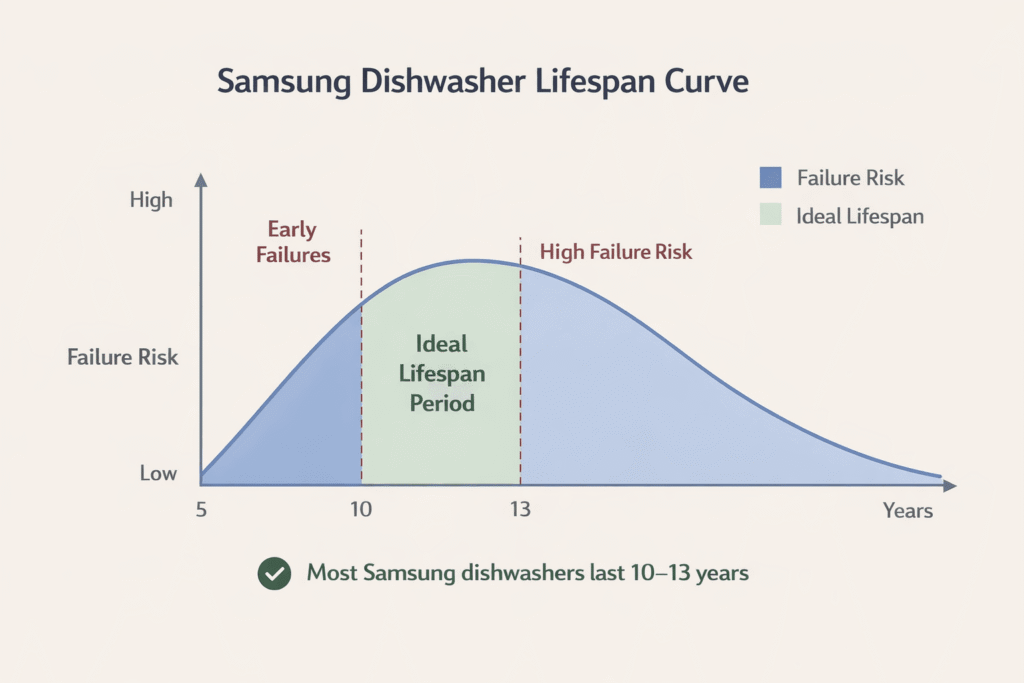
Most Samsung dishwashers last around 10 to 13 years. Owners who clean filters regularly and avoid hard-water buildup usually stay on the higher end of that range. This is slightly above market average for dishwashers, and compares well to dishwashers from brands like LG, Whirlpool, and Kenmore. This lifespan analysis is based on a combination of long-term owner reports, appliance repair frequency data, manufacturer service documentation, and hands-on technician observations across multiple Samsung dishwasher model years.
The stainless-tub models tend to age better than plastic-tub units, mainly because they resist heat stress and moisture fatigue over time. To see issues that you may face over the lifespan of your Samsung Dishwasher, check out this article.
| Summary | Details |
|---|---|
| Typical Lifespan | 10–13 years |
| Most Reliable Samsung Types | Stainless-steel tub models |
| Failures That Appear First | Pump/motor, drain pump, check valve wear |
| Common Late-Life Symptoms | Slower draining, louder wash noise, weaker drying |
| Cost-Effective Repair Window | Under ~$250–$300 or before year 10 |
| When Replacement Is Better | Electronics failures, door/tub damage, repeated faults |
Failures That Tend to Show Up With Age
Pump and motor issues usually appear first, typically after year eight. Some units start to develop intermittent draining problems caused by worn check valves or aging drain pumps. Control board faults also surface in older Samsung dishwashers, often showing up as random cycle interruptions. Heating elements rarely fail outright, but reduced drying performance is common in the later years.
Early Warning Signs
Pay attention to louder circulating noise, a drain cycle that takes longer than usual, or a cycle that stops mid-wash without an obvious pattern. Slight water beads on clean dishes or recurring musty smells often signal the drying system is weakening. A few technicians mention that older models occasionally develop door alignment issues that lead to small leaks before a major failure occurs.
How Usage Patterns Influence Samsung Dishwasher Longevity
Samsung dishwasher lifespan varies more by usage intensity than many owners expect. Homes running one cycle per day generally see slower mechanical wear than households running multiple daily loads, even when maintenance is similar. Frequent short cycles can be deceptively hard on pumps and drain components because they increase start-stop stress without fully flushing debris.
Light-use households often report that their machines remain mechanically sound well past the ten-year mark, while heavy-use households tend to encounter pump or drainage issues earlier, even with proper care. This usage sensitivity explains why lifespan reports for Samsung dishwashers show a wider spread than some competing brands.
Design Choices That Affect Long-Term Reliability
Samsung dishwashers emphasize modern features and electronic controls, which contribute to quiet operation and flexible cycle options but also increase reliance on control boards and sensors. Over time, these electronics become more vulnerable to moisture exposure and voltage irregularities than purely mechanical components.
Stainless-steel tubs mitigate some of this risk by managing heat and humidity more effectively than plastic tubs. In contrast, models with plastic tubs tend to retain moisture longer after cycles, which can accelerate wear on door seals, wiring connectors, and nearby electronics as the unit ages.
Why Samsung Dishwasher Lifespan Varies More Than Average
Compared to brands with simpler, more standardized platforms, Samsung dishwashers show greater lifespan variability across households. Two identical models can age very differently depending on water quality, electrical stability, and maintenance consistency. This variability does not necessarily indicate poor durability, but it does make outcomes less predictable.
Owners who proactively manage scale buildup, keep filters clean, and address minor issues early often report reliable operation deep into the expected lifespan range. Those who defer maintenance are more likely to encounter compounded electronic and drainage problems later on, shortening the machine’s usable life.
When a Replacement Makes More Sense
Once repairs approach a few hundred dollars on a unit past its tenth year, replacement often becomes more practical. Electronics-related issues, especially control board failures, tend to cascade, and those repairs can be costly on older Samsung machines. If the tub or door assembly is compromised, replacing the unit is almost always the better option. If you’re looking to replace your unit, check out our guides on the most reliable brands and the most eco-friendly brands.
Cost of Repair
See the repair cost for this product.Recommended Alternatives/Replacements
This article may contain affiliate links, which allow us to earn a small commission at no extra cost to you.
Best Overall Option: Bosch 300 Series
This model has a strong reputation for long term reliability and quiet operation. Owners report fewer pump and control board issues compared with many mid range brands. The filtration and rack design are simple to maintain, which helps with long life.
Link to purchaseBest Budget Option: LG Front Control
A straightforward design with fewer complex electronics than many modern models. Owners like the consistent cleaning and the low rate of early part failures. It is a reliable option for households that want a basic machine without added complications.
Link to purchaseBest Premium Option: KitchenAid PrintShield
This model is known for strong wash performance, stainless steel components, and dependable long term operation. The pump and filtration system hold up well under frequent use. Many owners report fewer leaks and sensor issues compared with other premium brands.
Link to purchase