

Lifespan Overview
Most Miele canister and upright vacuums stay in service for 12 to 18 years. Their sealed systems and durable motors make the lifespan fairly consistent across the Classic, Compact, and Complete series. Homes with heavy carpet use or frequent fine-dust cleaning tend to fall on the lower end of the range. Miele vacuums are some of the highest-quality and longest lasting vacuums on the market. Our longevity estimates reflect aggregated insights from appliance technicians, long-term owners, service manuals, and independent reviews.
| Category | Summary |
|---|---|
| Typical Lifespan | 12–18 years |
| Strengths | Sealed system, durable motors, consistent performance |
| Early Aging Signs | Airflow drop, uneven motor tone, sticky cord reel |
| Common Wear Items | Motor brushes, hose cuffs, powerhead wiring |
| Repairs Worth Doing | Brushes, hoses, powerhead wiring, filters |
| When to Replace | Multiple system failures or suction loss that persists |
| Top Alternatives | Hoover WindTunnel 3, Bissell CleanView Pet, Dyson Ball Animal 3 |
What Typically Ages First
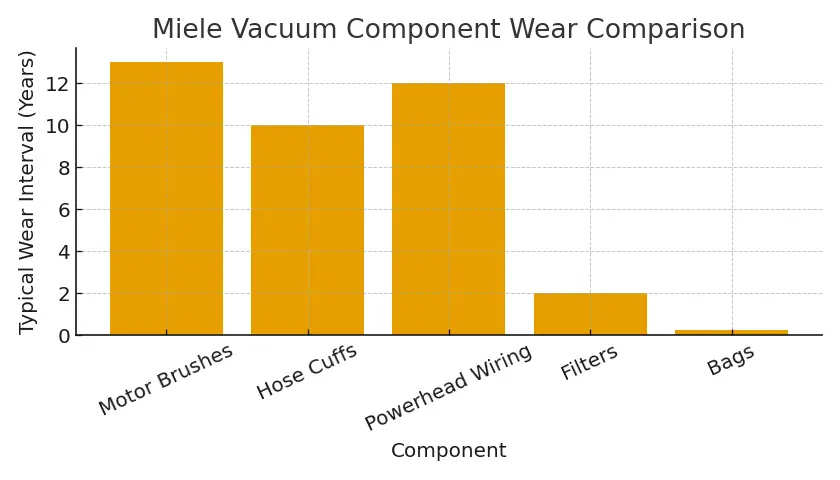
A noticeable drop in airflow is often the first thing owners report. Another early indicator is the motor developing a slightly uneven tone under load. On some units, the retractable cord mechanism can start sticking after many years, though it rarely fails outright.
A few components show wear more often than others. The motor brushes eventually thin out, especially in homes with long runtime cycles. Hose cuffs can loosen slightly with age, creating minor leaks. In some older units, the powerhead wiring harness becomes sensitive to movement. If you’re checking repair pricing, the repair cost guide for Miele vacuums gives a good sense of what those jobs usually run.
When Repair Is Worth It
Repairs usually make sense until around year fifteen, especially when the motor is still strong. Replacement starts to be the better choice when the motor, cord reel, and powerhead all show issues at the same time, or when suction loss remains after hose and filter maintenance. Learn more about common issues on Miele vacuums and how to repair them here.
How Usage Patterns Influence Miele Vacuum Longevity
Miele vacuums tend to be less sensitive to usage frequency than many competing brands, but usage type still matters. Homes with mostly hard flooring and moderate carpet loads often see the longest service life, as airflow resistance stays low and motor stress remains minimal. In contrast, frequent deep-carpet cleaning, fine dust pickup, or construction debris cleanup accelerates brush and motor wear even on these heavy-duty machines.
Long runtime cycles are another factor. While Miele motors tolerate extended use better than most, repeated full-house cleanings without bag changes can increase internal heat and shorten brush life. Owners who adjust cleaning habits slightly, such as changing bags earlier during heavy cleaning periods, often extend usable lifespan well beyond the average range.
Why Miele Vacuums Outlast Most Cordless and Robot Models
A major reason Miele vacuums achieve 12–18 year lifespans is their reliance on simple, serviceable mechanical systems rather than batteries or complex electronics. Unlike cordless or robot vacuums, there is no lithium battery to degrade, no charging circuitry to fail, and fewer moisture- or dust-sensitive control boards.
This design philosophy allows performance to decline gradually rather than abruptly. When issues do arise, they are usually isolated to individual components, such as brushes, hoses, or powerheads, rather than system-wide failures. As a result, Miele vacuums are more often repaired repeatedly over many years instead of being replaced wholesale, which is a key reason they are frequently still in service decades after purchase. Miele vacuums are comparable only to vacuums from Henry when it comes to life expectancy, with vacuums from SEBO and Oreck sitting just a tier below.
How to Extend the Lifespan
Miele vacuums respond well to consistent upkeep, and small habits can add several years of usable life. Keeping the bag below its maximum fill level prevents strain on the motor and reduces internal heat. Cleaning or replacing filters on schedule preserves airflow and helps the motor run efficiently. Checking the hose and wands for minor splits or loose fittings can prevent suction loss that might otherwise be mistaken for a larger issue. Powerheads benefit from occasional brush roll cleaning to avoid resistance that stresses the belt and bearings. Many long-time owners find that addressing these small maintenance steps early helps keep the vacuum running close to its original performance for far longer than most competing models. Learn more about how to maintain your vacuum here.
Cost of Repair
See the repair cost for this product.Recommended Alternatives/Replacements
This article may contain affiliate links, which allow us to earn a small commission at no extra cost to you.
Best Overall Option: Hoover WindTunnel 3 High-Performance
This model offers strong cleaning power without jumping into premium pricing. Its carpet pickup is noticeably better than many vacuums in the same bracket, and the internal belt setup stays straightforward to service. It holds suction well over time and tends to feel more solid than comparable mid-range units.
Link to purchaseBest Budget Option: Bissell CleanView Swivel Pet
A practical choice for anyone who wants low cost and predictable upkeep. The parts are simple, filters are inexpensive, and the machine usually keeps running well with basic care. Many users say it holds up longer than expected if the belt is swapped regularly, making it an easy vacuum to own.
Link to purchaseBest Premium Option: Dyson Ball Animal 3
Built for homes that deal with pet hair and want stronger floor agitation. The airflow system stays efficient even with years of use, and the brush design handles heavier debris without frequent jams. It is a good fit for owners who want a durable, high-suction upright with fewer long-term maintenance issues.
Link to purchase