
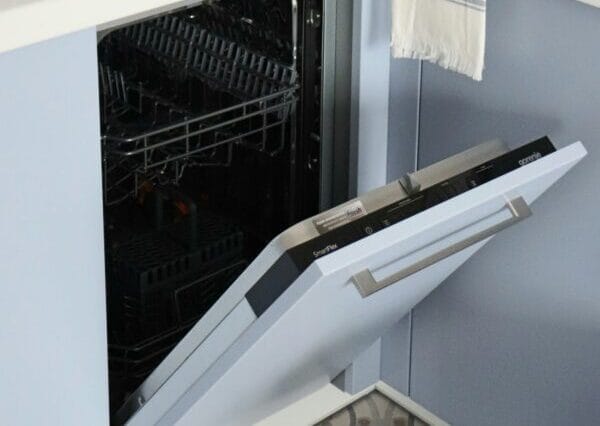

Dishwashers that receive consistent maintenance routinely reach 10–15 years of service, while neglected units often struggle to make it past 7–8. Most premature failures I see in service work are not design flaws. They are buildup, blocked flow, overheating, or leaks that went unnoticed for years. Maintenance is less about scrubbing everything spotless and more about keeping water, heat, and movement working as designed.
Why Dishwasher Maintenance Matters
Dishwashers operate in a harsh environment. Heat, detergent, food residue, grease, and minerals are present in every cycle. When any one of those starts to accumulate, components compensate by working harder. Pumps overheat, heaters scale over, and electronics get exposed to moisture they were never designed to see.
In units that failed early, the root cause was usually simple. A clogged filter starved the pump. A blocked spray arm caused longer cycle times. A leaking door seal slowly dripped onto wiring. None of those failures were sudden. They developed quietly over years.
The Core Systems That Require Ongoing Maintenance
Filtration System
Modern dishwashers rely on fine filtration to protect the circulation pump. When filters clog, the pump cavitates and overheats.
Technicians inspect filters for grease film and compacted debris, not just visible scraps. A filter that looks clean can still be partially blocked.
Spray Arms And Water Distribution
Spray arms must spin freely and deliver water evenly. Mineral buildup and food particles restrict flow, forcing longer wash times and higher pump load.
A restricted spray arm is one of the most common hidden causes of poor cleaning complaints.
Heating System
Heating elements and temperature sensors are sensitive to scale buildup. Hard water accelerates heater failure and can cause cycle errors.
Once scale forms on a heater, efficiency drops quickly. That extra runtime stresses control boards and wiring.
Door Seals And Leak Paths
Dishwasher leaks rarely start as floods. They begin as slow seepage at the lower door corners or vent area. Over time, that moisture damages insulation and electronics.
Door seals harden with age and detergent exposure, especially if never wiped clean.
Drain System
Partial drain restrictions force dirty water to recirculate. Pumps designed for clean water wear rapidly when grit and debris remain in the sump.
Drain issues are often blamed on plumbing when the real problem is internal buildup.
Dishwasher Maintenance Schedule
The schedule below reflects how a technician maintains residential dishwashers across brands such as GE, Bosch, Whirlpool, KitchenAid, Frigidaire, and Maytag.
| Maintenance Task | Frequency | Purpose | What Technicians Look For |
|---|---|---|---|
| Clean filter assembly | Monthly | Protects pump and improves cleaning | Grease film, fine debris |
| Inspect spray arms | Every 3 months | Ensures even water flow | Clogged jets, wobble |
| Wipe door seals | Monthly | Prevents leaks and odor | Cracks, residue |
| Run cleaning cycle | Monthly | Removes grease and scale | Odor, residue |
| Check drain area | Every 6 months | Prevents standing water | Sludge, blockages |
| Inspect inlet hose | Annually | Prevents leaks | Bulges, stiffness |
| Level check | Annually | Prevents leaks and noise | Front-to-back tilt |
Filter Cleaning: The Single Most Important Task
Filter neglect is the number one reason dishwashers fail early. Technicians remove filters fully, rinse with hot water, and use a soft brush if grease is present. The goal is not cosmetic cleanliness but restored water flow.
If a filter feels slick after rinsing, detergent residue remains. That residue attracts more debris during every cycle.
In homes that cook frequently or do not pre-rinse dishes, monthly cleaning is the minimum. Heavy-use homes often benefit from bi-weekly checks.
Spray Arm Maintenance and Inspection
Spray arms should spin freely with no resistance. A technician removes them and flushes water through the arm, checking each jet for restriction. Even partial blockage reduces cleaning efficiency and increases cycle length.
Mineral buildup often narrows spray openings gradually. Owners notice poor cleaning long before realizing the arm itself is the issue.
If an arm wobbles or rubs against racks, bearing wear may already be present.
Descaling And Internal Cleaning
Monthly cleaning cycles remove grease, detergent film, and early mineral buildup. Commercial dishwasher cleaners are formulated to dissolve residue without damaging seals or coatings.
Home remedies often fail to remove grease film and may accelerate rubber seal degradation if overused.
In hard water regions, technicians often recommend more frequent descaling. Scale does not just affect cleaning. It traps heat, causing heaters to overwork.
Door Seal and Vent Area Care
Door seals should be wiped with a damp cloth regularly. Detergent residue hardens seals over time, reducing flexibility and increasing leak risk.
Vent areas deserve special attention. Moisture escaping improperly can drip onto control boards. Many electronic failures start with small vent leaks that go unnoticed.
If a seal feels brittle or remains flattened after wiping, replacement is usually imminent.
Drain System And Sump Maintenance
Technicians inspect the sump for sludge, broken glass, labels, and food debris. Even a small obstruction can prevent full drainage.
Standing water after cycles is often blamed on plumbing when the internal check valve or sump is restricted.
This inspection always begins with disconnecting power before accessing internal components.
Water Supply And Inlet Hose Inspection
Inlet hoses degrade internally. Even hoses that look fine externally can collapse under pressure or develop weak spots.
Technicians look for stiffness, bulges, or discoloration and recommend replacement every 5–7 years regardless of visible condition.
A failed inlet hose can cause far more damage than the dishwasher itself.
Loading Habits That Extend Dishwasher Life
How dishes are loaded matters more than most people think.
Overloading blocks spray paths and forces longer cycles. Tall items placed incorrectly can prevent spray arm rotation entirely.
Light pre-scraping is beneficial. Fully pre-rinsing, however, can confuse soil sensors in newer models and cause incomplete cycles.
Using the correct detergent amount prevents excessive residue buildup. More detergent does not mean cleaner dishes.
Warning Signs Maintenance Is Overdue
Dishwashers rarely fail without warning. Common early signs include:
- Cloudy glasses despite clean filters
- Longer cycle times than normal
- Unusual pump noise during wash
- Standing water at cycle end
- Dampness under the door
Addressing these early often prevents expensive repairs.
Once multiple major components show wear, maintenance shifts from prevention to cost control. Pumps, heaters, and control boards are expensive parts. As a general guideline, if a dishwasher is over 10 years old and requires multiple internal repairs, replacement becomes more economical. Learn more about the cost of dishwasher repairs here.
Conclusion
Dishwasher maintenance is not complicated, but it must be consistent. Units that receive routine filter cleaning, spray arm inspection, descaling, and seal care regularly reach 10–15 years of service. Those that do not often fail years earlier due to avoidable stress on pumps, heaters, and electronics.