
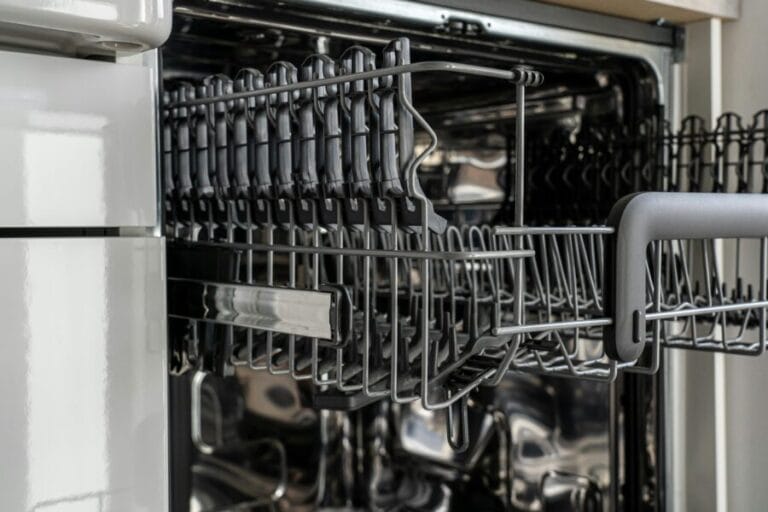

Frigidaire dishwashers most often develop draining problems, poor wash performance, heating failures, and intermittent electronic issues, typically beginning around the 5–7 year mark depending on usage and water quality.
How Technicians Approach Frigidaire Dishwasher Troubleshooting
Frigidaire dishwashers are generally straightforward to diagnose compared to some European brands. Most failures are mechanical or sensor-driven rather than structural. Technicians focus first on confirming water movement, temperature rise, and control response before condemning expensive components.
Any internal inspection or electrical testing is always performed with power disconnected to prevent shock or board damage.
Dishwasher Will Not Start or Stops Mid-Cycle
This is one of the most common Frigidaire service calls and often one of the least expensive to resolve.
Typical Causes
The door latch assembly is the primary failure point. Frigidaire uses a door switch system that is sensitive to alignment. Worn latches, weak springs, or a failing microswitch can interrupt the control board signal even though the door appears closed.
In fewer cases, control boards fail due to moisture intrusion or relay failure, especially in units installed without proper insulation gaps.
Technician Diagnostic Path
A technician verifies door closure feedback at the control, then tests switch continuity. If the latch tests good, the control board is evaluated for response and stored fault history.
Most units resume normal operation after latch replacement.
Dishwasher Not Draining Properly
Standing water at the end of a cycle is extremely common on Frigidaire dishwashers, particularly mid-range models.
Typical Causes
Drain pump impellers wear or jam with debris. Frigidaire pumps are compact and can clog more easily if filters are not cleaned regularly. Drain hose routing issues during installation also contribute, especially when high loops are missing.
Technician Diagnostic Path
After disconnecting power, technicians inspect the pump housing for obstructions, verify pump motor resistance, and confirm the drain path is clear. If the pump hums but does not move water, replacement is required.
Poor Cleaning or Weak Spray Pressure
This issue often appears gradually and is frequently misdiagnosed as a detergent problem.
Typical Causes
Circulation pump wear is the most common culprit. As the wash motor bearings degrade, pressure drops even though the pump still runs. Clogged spray arms and heavy mineral scale also contribute, especially in hard-water areas.
Technician Diagnostic Path
Technicians check spray arm rotation, listen for abnormal pump noise, and confirm water flow during wash. A whining or growling sound almost always points to pump wear.
Dishes Not Drying or Water Not Heating
Frigidaire dishwashers rely heavily on their heating element for both cleaning performance and drying. To learn more about this issue check out our full troubleshooting guide for Frigidaire dishwashers not heating.
Typical Causes
Heating element burnout is common, particularly in homes with hard water. In some cases, the heater is functional but disabled by a failed thermistor or control board logic error.
Technician Diagnostic Path
Temperature rise is measured during a wash cycle. If water does not heat, the element is tested for continuity, followed by sensor and control verification.
Dishwasher Overfills or Will Not Fill
Filling problems can look dramatic but are often simple to resolve.
Typical Causes
A stuck float or failed float switch prevents proper fill control. Debris buildup around the float mechanism is common in older units.
Water inlet valve failures also occur, either sticking closed or allowing slow fills.
Technician Diagnostic Path
Technicians inspect float movement, test switch operation, and verify inlet valve electrical response. Mechanical float issues are often corrected without major parts replacement.
Cycles Run Too Long or Stop Early
This problem is more common on Frigidaire models with soil-sensing wash systems.
Typical Causes
The turbidity sensor becomes coated with detergent residue or fails electrically, causing the control board to misjudge water cleanliness. This leads to excessively long cycles or premature termination.
Technician Diagnostic Path
The sensor is inspected and tested. In many cases, replacement restores normal cycle timing immediately.
Random Beeping, Flashing Lights, or Dead Control Panel
Electronic complaints increase as Frigidaire dishwashers age past seven years.
Typical Causes
Control boards suffer from relay wear, moisture exposure, or power surge damage. Wiring harness connectors near the base can also loosen or overheat.
Technician Diagnostic Path
Technicians verify power supply, inspect harness connections, and test control response. Control boards are only replaced after ruling out door and wiring faults.
Common Frigidaire Dishwasher Error Codes
| Error Code | Meaning | Typical Cause |
|---|---|---|
| i10 | Fill problem | Inlet valve, float switch, low water supply |
| i20 / i40 | Drain problem | Drain pump, clogged drain path |
| i30 | Leak detected | Water in base, float switch triggered |
| i60 | Heating issue | Heating element or control failure |
| i90 | Control fault | Control board or wiring issue |
Error codes help narrow diagnosis but do not replace physical inspection.
Repair vs Replacement Considerations
Once Frigidaire dishwashers reach 8–9 years old, pump or control board failures often exceed practical repair value. Smaller issues such as latches, valves, and sensors are usually worth addressing earlier in the unit’s life. Technicians weigh age, total repair cost, and overall performance before recommending repair or replacement. To learn about repair cost for these units, check out this article.
If you want a clearer answer before deciding, our Repair or Replace Tool provides a data-backed recommendation.
Frigidaire dishwashers are predictable. They rarely fail catastrophically, but components wear in a consistent order. Owners who clean filters and avoid overloads usually get several extra years of service. Those maintenance habits matter more on Frigidaire than on heavier-duty premium brands. If you don’t think repair is worthwhile and need a new dishwasher, check out our recommendations for the most reliable brands.
Summary
Most Frigidaire dishwasher problems trace back to pumps, heaters, sensors, or door-related switches rather than the tub or frame. Early diagnosis keeps repair costs reasonable, while delayed service often pushes units into replacement territory. Understanding Frigidaire-specific failure patterns helps set realistic expectations and avoid unnecessary repairs.