
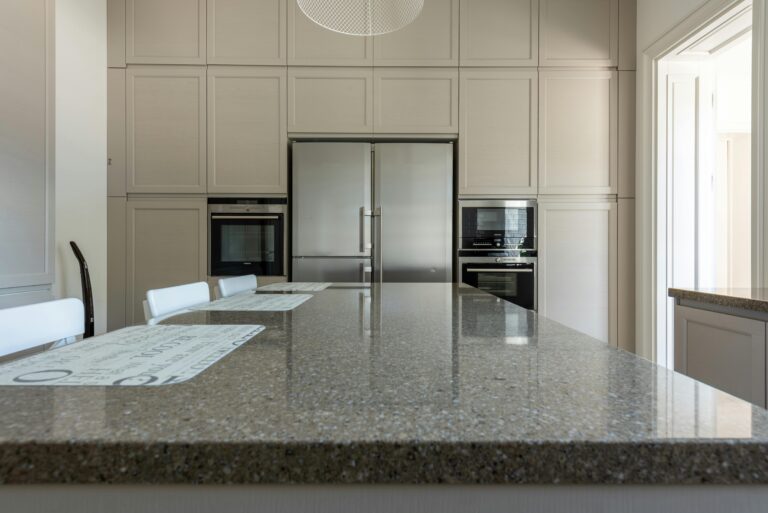

Across repair companies and owner reports, most GE refrigerator repairs fall between 150 and 600, but individual failures can land higher or lower. GE refrigerators sit in the middle of the service-cost spectrum. They aren’t as cheap to repair as classic Whirlpool units, but they’re far less expensive than some modern high-end brands with elaborate electronics.
What you actually pay depends heavily on which component failed and whether the fridge is a top-freezer, side-by-side, or French-door model. French-door units carry the highest repair bills because they use more sensors, dampers, fans, and dual-evaporator setups. Knowing when to repair depends heavily on how old the fridge is compared to it’s average lifespan. Here’s how the major categories break down.
Breakdown by Repair
| Issue / Category | Symptoms | Likely Repair | Typical Cost Range |
|---|---|---|---|
| Evaporator fan failure | Warm fridge, cold freezer, chirping/squealing | Evaporator fan motor replacement | $180–$350 |
| Condenser fan failure | Long run times, hotter cabinet back | Condenser fan motor replacement | $150–$300 |
| Ice maker malfunction | Slow/no ice, frozen fill tube | Repair or replace ice maker assembly | $150–$450 |
| Defrost system failure | Ice on coil, warm fridge | Heater, thermostat, or board replacement | $180–$500 |
| Damper or sensor issue | Uneven temps, warm fridge compartment | Damper or thermistor replacement | $150–$350 |
| Water leak / filter housing | Drips below fridge, wet floor | Filter housing or water-line repair | $150–$320 |
| Door gasket wear | Condensation, temp swings | Door gasket replacement | $130–$250 |
| Sealed-system issue | Not cooling, compressor overheating | Leak repair or compressor replacement | $450–$1,500 |
Evaporator and Condenser Fan Repairs
Fan motors are among the most common GE refrigerator repairs, especially as units age past the 8- to 10-year mark. The evaporator fan in the freezer tends to wear first, usually showing up as temperature swings, a chirping noise, or a warm fridge with a cold freezer. Replacing the evaporator fan typically lands between $180 and $350, depending on model and labor rates.
The condenser fan sits behind the fridge, near the compressor. When it slows down or seizes, the fridge starts running hotter and longer. Condenser fan replacements generally come in slightly cheaper, averaging $150 to $300.
Ice Maker Repairs and Replacements
GE ice makers fail more often on French-door and side-by-side units because the designs place them in warmer compartments. A frozen fill tube, worn module, or failed internal motor can all lead to slow or no ice production. Basic ice maker repairs usually fall in the $150 to $250 range. Full ice maker replacements tend to run $250 to $450, depending on the assembly design and whether it includes the mold heater and fill system.
Defrost System Repairs
The defrost system (heater, thermostat, and control) keeps the evaporator coil from freezing solid. When the system fails, the fridge warms while the freezer stays cold. Defrost thermostat or heater replacement typically costs $180 to $300.
If the issue traces back to a failed electronic control board that isn’t triggering defrost cycles, the cost goes up. Control boards for GE fridges generally run $250 to $500 installed, with French-door models on the higher end.
Temperature Sensors, Dampers, and Controls
GE uses thermistors, damper assemblies, and fan-control circuits to manage airflow. A stuck or broken damper can cause uneven cooling or a warm fridge compartment. Damper replacements usually fall around $200 to $350. Thermistors are inexpensive parts, but the diagnostic time adds cost. Most thermistor-related repairs land between $150 and $250.
More advanced electronic issues, such as failed user-interface boards or main control boards, move into the $250 to $500 range, similar to defrost-board replacements.
Water Leaks and Filter Housing Repairs
Water leaks on GE refrigerators are commonly traced to the filter housing or the plastic water lines running through the door. Filter-housing replacements are relatively common on newer GE models and cost $180 to $320.
Door-line leaks vary widely because accessing the line may require partially disassembling the door. Most repairs end up between $150 and $300, but can go higher if a full door harness is needed. Learn more about this issue here.
Door Gaskets and Seal Repairs
Gaskets wear slowly and often go unnoticed until cooling performance drops. GE gasket replacements generally cost $130 to $250, depending on door size and labor rates. These repairs usually pay for themselves quickly because poor seals force the compressor to run constantly, shortening the lifespan of the fridge, and increasing energy cost.
Sealed-System Repairs (The Expensive Category)
This is where costs spike. If the fridge has a refrigerant leak, a failing compressor, or a restricted capillary tube, the repair becomes both labor-intensive and equipment-dependent. GE sealed-system repairs usually start around $450 to $800 for simple leak fixes and recharge, and can reach $900 to $1,500 for compressor replacement. Most homeowners replace the fridge rather than invest in sealed-system work once the unit is older than 12 to 15 years.
Overall Cost Expectations
For most GE refrigerator issues, the typical repair bill stays between $200 and $400, with fan motors, ice makers, sensors, and gaskets making up the bulk of service calls. When the problem involves sealed-system work or advanced electronics, the cost moves into the higher ranges. You can learn more about these common failures here.