
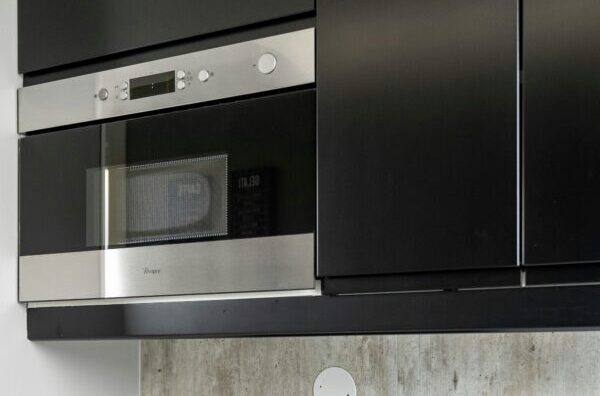

Most Panasonic microwave repairs fall between $120 and $350 depending on the failure and how old the unit is. Inverter models tend to sit higher in the price range because the inverter board is both the heart of Panasonic’s heating system and the component most likely to age out first. Mechanical repairs like door switches, thermostats, and turntable motors are straightforward and generally stay on the lower end. High voltage repairs such as magnetrons or inverters push toward the top of the range.
If I’m working on a Panasonic that’s past the ten year mark, I always check whether the cost of a magnetron or inverter replacement is still worth it. On younger units, repairs make a lot more sense.
Common Panasonic Microwave Repairs and What They Cost
Here is a real world cost table based on typical service pricing, parts distributors, and owner reports. Counter-top microwave repairs will always fall on the lower end of this scale. You can learn how to diagnose and fix these common issues in our full guide here.
Panasonic Microwave Repair Cost Table
| Repair Type | Typical Symptoms | Likely Part(s) | Part Cost | Total Repair Cost |
|---|---|---|---|---|
| Door switch set | No heat, flickering light, starts/stops | Switches (3-piece set) | $10–$25 | $120–$180 |
| Thermostat / thermal cutoff | Shuts off mid-cycle, restarts after cooling | Thermostat or cutoff | $10–$30 | $130–$190 |
| Turntable motor | Tray stalls, no rotation | Motor, coupler | $15–$35 | $110–$170 |
| Cooling fan / blower | Weak airflow, overheating, noise | Blower fan motor | $20–$50 | $150–$230 |
| Inverter board | Uneven heating, clicking, fluctuating power | Inverter board | $90–$180 | $200–$350 |
| Magnetron | Slow heating, weak power, overheats | Magnetron | $80–$140 | $180–$320 |
| Control board | Intermittent function, keypad issues | Main board | $60–$120 | $160–$280 |
| Cavity / waveguide damage | Sparking in cavity | Waveguide cover (if minor) | $8–$25 | $75–$150 |
What the Inverter System Is and Why It Matters
Panasonic’s inverter design is different from traditional transformer microwaves. Instead of using a big transformer that cycles power on and off at full intensity, an inverter board delivers a smooth, variable power output. That allows the magnetron to run at true lower power levels without constantly starting and stopping. You get better temperature control, faster heat response, and more even cooking.
The tradeoff is longevity. Transformers are bulky but simple and tend to last a long time. Inverter boards are lighter and more efficient, but they work harder and contain sensitive electronics that gradually wear down from heat, moisture, and constant cycling. Once an inverter starts failing, uneven heating, clicking, or fluctuating power usually show up long before total loss of heat.
Why Panasonic Repairs Cost What They Do
Panasonic’s inverter system is efficient and smooth, but it replaces a cheap, simple transformer with an advanced electronic board. That board is more expensive and is also the most stressed component in the entire microwave. Magnetrons on Panasonic units are also a bit pricier than the generic replacements used in some budget brands. Door switches, thermostats, and motors remain inexpensive across all models.
When Repair Makes Sense Versus Replacement
A Panasonic microwave is usually worth repairing when the failure involves switches, thermostats, fans, turntable motors, or a control board and the unit is under eight to ten years old. Inverter board or magnetron failures on younger microwaves can still be worth fixing, especially if the rest of the unit is in good shape.
Replacement becomes the more practical choice when the microwave is older than ten years, especially if the repair quote approaches $250 to $300. At that point, you’re often paying more than the unit’s remaining lifespan is worth.
Signs a Panasonic Microwave Repair Is Coming
Early signs of inverter trouble include uneven heating, clicking during warm-up, or the microwave struggling to reach full power. A noticeable decline in heating strength usually means the magnetron is wearing out. Sudden mid-cycle shutdowns or thermal cutoffs tripping are usually airflow or thermostat issues. Flickering interior lights or heating that starts only when you push on the door point straight to worn door switches.
Catching these signs early can prevent multiple parts from failing at once.
Final Takeaway
Panasonic microwaves have a solid reputation, but their repair costs shift as they age. Basic repairs tend to be affordable, while inverter and magnetron replacements can get expensive on older units. With good ventilation and moderate daily use, most Panasonic microwaves deliver close to a decade of reliable service. Many only need one major repair in their lifetime, which is typically 8-12 years.