
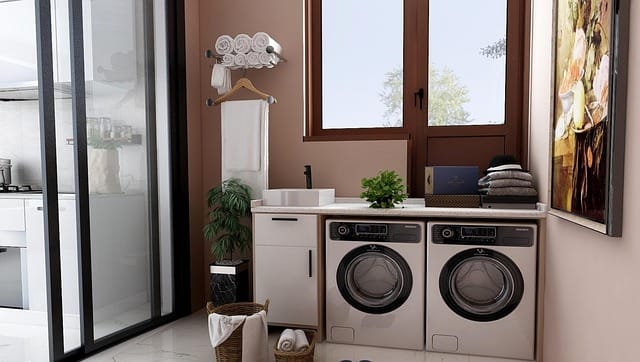

GE washers last about 10 to 14 years in most homes. This range comes from service data, owner reports, and technician observations across GE Profile, GE UltraFresh, GE Spacemaker, and GE Cafe laundry lines. Light-use households often see the upper end of that range, while large families running multiple loads per day tend to land closer to 10 years. See how this compares to the average lifespan for most washers here.
GE builds washers across several platforms, from basic top-load agitator machines to electronically complex front-load units. The mechanical simplicity of some designs plays a large role in how long the washer stays reliable. GE washers fall in a similar lifespan band as brands such as Bosch, Samsung, and LG.
Lifespan by GE Washer Type
Different washer designs age differently. Here is how lifespan typically breaks down across GE washer types.
| GE Washer Type | Expected Lifespan | Notes on Durability |
|---|---|---|
| Top-load with agitator | 12 to 15 years | Fewer electronics, robust transmission |
| Top-load high-efficiency impeller | 10 to 13 years | More sensors and control boards |
| Front-load washers | 9 to 12 years | Bearings, door boots, and control boards wear sooner |
| Compact and apartment-size units | 8 to 11 years | Smaller motors and tighter tolerances |
Traditional top-load GE models often outlast front-load machines because they rely on simpler drive systems and fewer moisture-sensitive electronics.
Common GE Washer Models and Longevity
Across service calls, several GE washer families show consistent aging patterns:
- GE Profile top-load washers tend to age well mechanically but may need lid lock or control board repairs later in life.
- GE UltraFresh front-load washers clean efficiently but commonly see door boot, drain pump, or bearing wear before year 12.
- GE Spacemaker and compact models trade lifespan for size, especially in high-use apartments.
- GE Cafe washers use premium finishes but share similar internal components with GE Profile models.
Model family matters more than brand reputation when estimating lifespan.
What Shortens a GE Washer’s Life
Usage habits have a bigger impact on lifespan than brand alone.
Oversized loads stress the motor, suspension rods, and bearings. Excess detergent creates residue that affects drain pumps and pressure sensors. Poor ventilation around front-load machines accelerates mold and seal deterioration.
Hard water is another factor. Mineral buildup shortens the life of inlet valves, heating elements on select models, and pressure systems.
Maintenance That Helps GE Washers Last Longer
Simple care extends washer life noticeably:
- Run cleaning cycles periodically to reduce soap and mineral buildup.
- Avoid overloading, especially with heavy items like towels or bedding.
- Leave the door open on front-load washers to dry the seal.
- Replace worn hoses before leaks occur.
Technicians often note that machines with basic preventive care reach the upper end of the lifespan range.
When Repairs Stop Making Sense
Once a GE washer passes 10 years, major component failures change the math. Bearing failures, motor replacements, or control board issues often cost $300 to $600 with labor. At that point, replacement becomes more economical, especially for front-load units. See our guide here on how much typical washing machine repairs cost. If you need to replace your unit, check out our recommendations for the most durable washing machines.
Smaller repairs like lid locks, pumps, or inlet valves can still be reasonable into year 12 if the rest of the machine is in good condition.
GE Washer Lifespan Compared to Other Brands
GE washers generally land in the middle of the market. They outlast many entry-level brands but do not typically match the longevity of commercial-style machines. Their advantage is parts availability and familiar repair procedures, which helps keep aging units serviceable longer. Learn about how GE dryers compare to other brands here.
FAQ
How long do GE top-load washers last?
Most GE top-load washers last 12 to 15 years, especially agitator-style models with fewer electronics.
Do GE front-load washers last as long?
Front-load GE washers usually last 9 to 12 years due to bearing wear and moisture-related component failures.
Is it worth repairing an older GE washer?
Minor repairs are often reasonable up to year 12. Major mechanical or electronic failures after that point usually favor replacement.
Does GE still make reliable washers?
GE washers remain competitive for durability, especially in simpler top-load designs with proven platforms.
How a Technician Evaluates Washer Lifespan
A technician typically checks bearing noise, suspension wear, motor performance, and control responsiveness when assessing remaining life. Any internal inspection or electrical testing begins with disconnecting power. Excess vibration, grinding noises, or repeated error codes usually indicate the washer is nearing the end of its practical service life.