
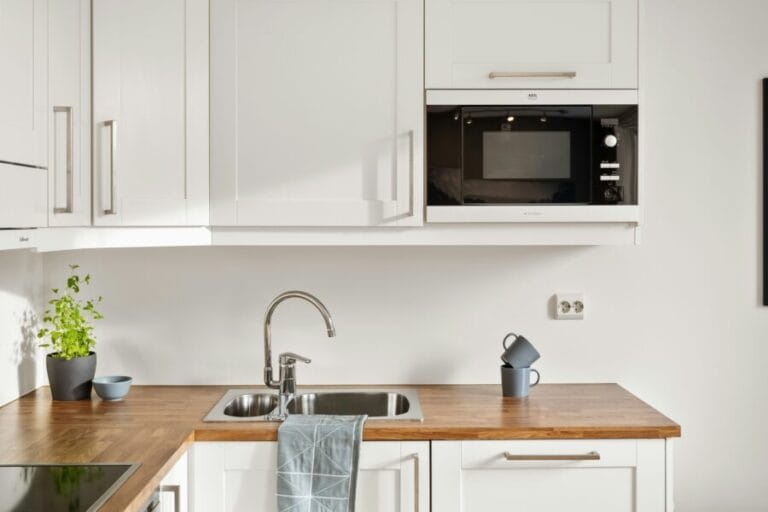

Sharp microwaves tend to break in consistent ways, and their straightforward design makes the patterns even more obvious. After years of working on these units, I can usually predict the culprit before I even take the case off. Whether it is a countertop unit that has seen ten steady years of use or an over the range model installed above a busy gas stove, the same failures repeat across most models.
Click here to learn about the most reliable microwave brands.
I’ve had service calls where the owner swore the microwave “just died out of nowhere,” only for the door switch assembly to be hanging by a thread. Other times, a customer insisted they had perfect ventilation, and I opened the unit to find a blower packed with grease thick enough to slow it to half speed. Once you understand where these microwaves tend to wear out, the diagnosis becomes much quicker.
Below are the failure categories that show up the most often in Sharp microwaves, along with how technicians confirm each one and what the repair normally involves.
Common Issues
Door Switch Failures
Door switch failures are far and away the most common Sharp microwave problem. Every Sharp uses a set of small switches that confirm the door is fully closed. If one of them sticks or stops making solid contact, the microwave either refuses to heat or shuts down before the magnetron kicks in. Many service calls start with the same description: the turntable spins, the light works, but the microwave will not heat.
Sharp units tend to give telltale signs. The interior light may flicker when the door moves. The microwave may click repeatedly as it tries to engage the high voltage circuit. Sometimes customers tell me they can get the microwave to heat only if they push in on the door with their palm. That one is almost always a door switch set on its last legs.
Because the switches age at similar rates, I replace the entire set rather than just the failed one. It prevents repeat visits and ensures the heating system has reliable feedback. This is one of the least expensive Sharp repairs and one of the most satisfying, because the microwave usually works perfectly again immediately.
See our full troubleshooting guide for this issue.
Magnetron Decline
Sharp magnetrons hold up reasonably well, but no magnetron lasts forever. Around year seven or eight, output often begins to slide. The decline is slow at first. Food takes longer to heat, or you have to add an extra minute to cycles that used to be reliable. I remember one homeowner who thought their recipes were suddenly off, only to discover the magnetron was producing half the energy it used to.
A failing magnetron may hum more loudly or trigger the thermostat during long cycles. Once it reaches this stage, the microwave becomes inconsistent. Some cycles finish without issue, others trip the safety cutoffs. Magnetron replacement is a major repair and usually only makes sense on mid age Sharp units. Once the microwave passes ten years, most owners choose replacement instead.
Thermostat and Thermal Cutoff Failures
Over the range Sharp microwaves deal with more heat stress than countertop models. Steam, grease, and rising heat affect the internal temperatures, and Sharp thermostats eventually begin tripping earlier than they should.
If a microwave shuts off mid cycle and comes back after cooling, that is the thermostat doing its job, even if it is doing it too soon. Long cycles exaggerate the problem. I once serviced a Sharp model that shut off halfway through every baked potato but worked flawlessly for thirty second reheats. Cleaning the vent path and replacing a weak thermostat fixed it.
Thermal cutoffs are another story. They are one time safety fuses that blow permanently when temperatures spike. Before replacing them, I always check for airflow restrictions or an overheating magnetron so the new cutoff doesn’t fail immediately.
Turntable Motor Problems
Turntable motors wear down slowly, and customers usually notice odd rotation long before the motor completely dies. Sometimes the tray shakes. Sometimes it stalls unless the food is perfectly balanced. And every now and then, the motor hums loudly but the tray stays still because the coupler has stripped out.
Countertop Sharp units make this an easy repair. Built in and OTR models take longer because of the extra disassembly. I’ve seen turntable motors last twenty years on lightly used countertop models and fail in five on heavily used OTR units. Usage patterns matter.
Blower and Cooling Fan Failures
The blower fan is the unsung hero inside every Sharp microwave. When it slows or clogs, everything inside runs hotter. The thermostat trips, the magnetron cooks itself, and airflow at the front vents weakens noticeably. I have opened units where the blower blades were packed solid with kitchen grease. Cleaning helped, but replacing the blower restored full airflow.
A noisy blower is often an early sign. Grinding, rattling, or a sudden increase in fan volume typically means the bearings are going. Replacing a blower on a younger microwave is almost always worth it.
High Voltage Diode Failure
Diodes are inexpensive and fairly common failures on Sharp models that are past middle age. When a diode weakens, heating becomes inconsistent or the microwave begins to buzz when cooking starts. A shorted diode may blow the fuse as soon as the high voltage circuit engages. Testing diodes requires care because they sit next to the capacitor, but the repair itself is simple.
Control Board Issues
Sharp control boards have a better reputation than some brands, but they do fail with age. Symptoms include intermittent powering, relays clicking without activating the magnetron, or displays that flicker. Sometimes only one or two buttons stop responding, which usually points to a worn keypad membrane rather than the board itself.
In older Sharp microwaves, control board decline often shows up right alongside magnetron wear. At that age, most customers choose replacement instead of putting money into both components.
Noise Problems
Noise issues show up in several forms. A scraping sound usually comes from the blower. A rhythmic thump tends to come from an uneven turntable ring. A deeper hum may be the magnetron or transformer beginning to strain. Sharp microwaves are typically quiet machines, so new noises are worth paying attention to. One customer described theirs as sounding like “a diesel engine warming up,” and it turned out to be a transformer nearing its end.
Sparking or Arcing
Sparking inside Sharp microwaves is more dramatic than harmful in many cases. A dirty or damaged waveguide cover is the usual cause. Once food debris carbonizes, it arcs easily under microwave energy. Replacing the cover and cleaning the cavity generally solves it. Sharp’s enamel coatings can chip with age, which also leads to arcing. Minor chips can be patched with microwave safe enamel, but severe cavity damage means replacement.
No Power or Dead Microwave
A dead microwave often leads people to assume the worst, but Sharp models usually fail at the fuse, door switch set, or thermal cutoff before anything expensive goes bad. I always check the fuse first, then the switches, then the thermal cutoffs. If the new fuse blows instantly, the issue is deeper in the high voltage system, typically a diode or magnetron fault.
When Repairs Make Sense
Sharp microwaves under eight to ten years old are usually worth repairing when the failure involves switches, thermostats, fans, diodes, motors, or airflow issues. These repairs are affordable and restore normal performance. On older units, magnetron and control board repairs often cost more than the microwave is worth. At that point, replacement is the practical choice. Learn more about how long Sharp microwaves should last and how much they cost to repair.
Final Takeaway
Sharp microwaves are dependable, straightforward machines with predictable failure patterns. Their simplicity makes them easier to diagnose and repair than many modern inverter based models, and most common issues are solvable without major expense. Keeping vents clear, cleaning filters, and avoiding long back to back cook cycles helps extend their lifespan significantly. With moderate use and proper airflow, a Sharp microwave can deliver a decade or more of reliable service.