
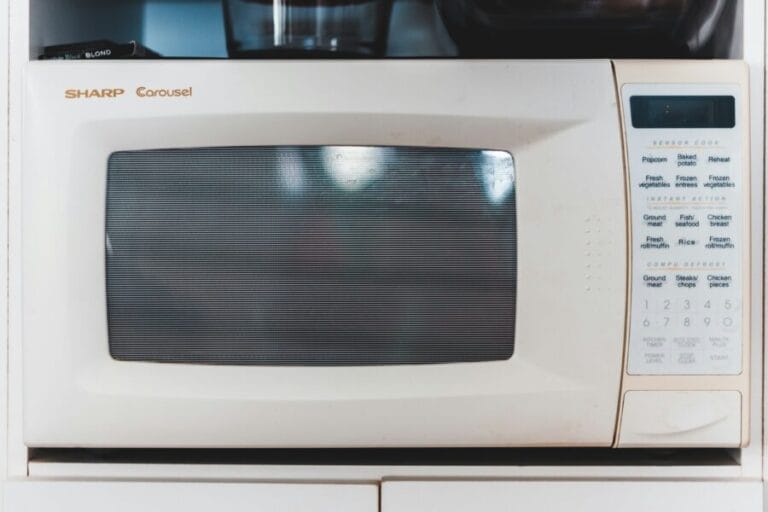

Most Sharp microwaves last between 7 and 12 years, depending on usage patterns and ventilation. This falls right in line with the typical life expectancy for the average microwave on the market.
In the field, I see Sharp units hold up respectably compared to similar mid range brands. Their designs tend to be straightforward, and many of their countertop and over the range models rely on familiar high voltage components that age in predictable ways. The first five to seven years are usually trouble free for light to moderate users. As the microwave passes year eight, the magnetron (the heat element), door switches, and thermostats become more likely to show wear.
See what microwave brands last the longest.
Lifespan Overview
The first five to seven years are generally reliable. Sharp units heat consistently, the fans run quietly, and the safety thermostats operate as intended. Once the microwave crosses the eight-year mark, the wear points start showing themselves. The magnetron is the biggest one. Heating strength begins to fall off, sometimes gradually enough that owners don’t notice until cook times double. Door switches also start sticking around this age, especially on units where the door is slammed shut dozens of times a week. That single set of switches can shut the whole unit down if even one begins to drift out of spec.
Signs of Wear
Past ten years, you start seeing more signs of age. The turntable motor may get noisy. The magnetron becomes sluggish. Control boards on older models may develop intermittent quirks. At this stage, repairs involving the magnetron or the main board often cost more than the remaining life of the microwave is worth. Door switches, thermostats, and motors are still reasonable fixes, but major high-voltage repairs rarely make sense on a microwave that’s already a decade old. If you need to repair your microwave, check out our guide on repair costs for Sharp microwaves.
How to Extend Sharp Microwave Life
Ventilation has a bigger impact on lifespan than most people realize. Over-the-range Sharp models live a harder life because steam and grease rise straight into the vent path. If the filters get clogged or the blower collects grease, the magnetron and thermostat run hotter than they should. When the thermostat becomes sensitive from repeated overheating, the microwave starts shutting off mid-cycle and coming back only after cooling. Countertop models with clean airflow last noticeably longer. Learn more about these common issues here.
With decent ventilation, moderate daily use, and regular filter cleaning, many Sharp microwaves reach the ten-year mark without drama. A little airflow awareness and avoiding back-to-back long cook cycles go a long way toward stretching their lifespan.
Sources
Lifespan ranges are calculated using historical reliability data, technician diagnostics, and large-sample consumer reviews.