

Average Repair Costs for Sharp Microwaves
Sharp microwave repairs generally range from $110 to $350, with the biggest influence being the type of microwave. Countertop models are the cheapest to repair because everything is easy to reach and the design is simple. Over-the-range (OTR) models cost more because they take more heat abuse from the cooktop below, and the disassembly process is longer. Built-in or drawer-style Sharp microwaves sit at the top end because parts are more expensive and installation adds labor time. Learn more about how long your Sharp microwave should last here.
Sharp uses traditional high-voltage systems in many of their models, so repair patterns are familiar. Magnetron decline, door switch wear, thermal cutoff failures, and turntable motor issues make up the bulk of service calls.
Repair Cost Differences by Microwave Type
Countertop Sharp Microwaves
These are the cheapest to repair. They have straightforward layouts, better natural airflow, and quicker access for technicians. Most repairs fall between $110 and $180, except magnetron work.
Over-the-Range Sharp Microwaves
OTR models run hotter due to rising steam and grease, so thermostat and magnetron failures show up earlier. Removing and reinstalling the unit adds cost. Repairs typically land between $150 and $300.
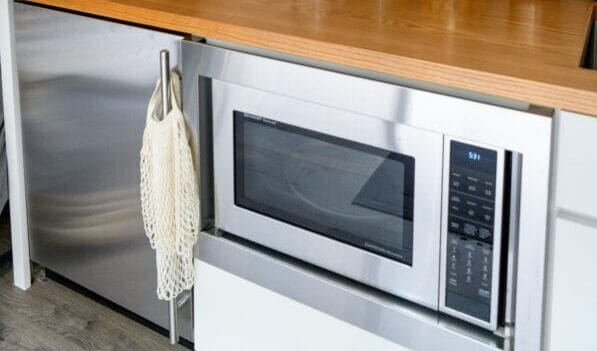
Built-In / Drawer-Style Sharp Microwaves
These models look great but are the most expensive to service. Parts cost more, and technicians spend extra time accessing the microwave. Repairs often fall between $200 and $350, with some drawer models going slightly higher depending on the part.
Sharp Microwave Repair Costs
The following table gives average cost ranges I see for most repairs. Countertop models will sit at the lower end of this range and built-ins will sit at the higher end. Learn more about these common failures here.
| Repair Type | Typical Cost Range | Notes |
|---|---|---|
| Door switch replacement | $110–$170 | Very common. Quick fix on most models. |
| Thermal cutoff / thermostat | $120–$190 | Frequent on OTR units with poor ventilation. |
| Turntable motor | $110–$160 | Easy on countertop units, harder on built-ins. |
| Blower or cooling fan | $140–$230 | More common on OTR models due to heat and grease. |
| Magnetron replacement | $180–$320 | Major repair. Often not worth it on older units. |
| Control board repair/replacement | $160–$280 | Intermittent powering or keypad issues. |
| In-cavity or waveguide damage | Not recommended | Unsafe to repair. Replacement required. |
Why Sharp Repair Costs Vary
The biggest cost drivers are accessibility and heat exposure. Countertop models barely get warm compared to the oven-mounted OTR versions, which regularly breathe in grease and steam. That extra heat ages the magnetron, thermostats, and switches faster. Built-ins and drawer models take the longest to remove, bench test, and reinstall, which naturally raises labor costs.
Parts pricing also varies. Sharp magnetrons and control boards usually cost more than generic replacement parts for bargain-brand microwaves, while switches, thermostats, and motors remain inexpensive.
When a Repair Makes Sense
Sharp microwaves under eight to ten years old are usually worth fixing if the repair involves a thermostat, door switch set, fan motor, or turntable motor. These are inexpensive and restore full function easily.
Once the microwave crosses the ten-year mark, magnetron or control board repairs tend to exceed the remaining usable lifespan. At that point, most homeowners choose replacement instead of putting $200+ into an aging unit.
FAQ
Why are over-the-range Sharp microwaves more expensive to repair?
They run hotter, collect more grease, and take longer to remove and reinstall during service.
Is a magnetron replacement worth it?
Sometimes. On a younger microwave, yes. On an older Sharp unit, the cost usually approaches the price of a new microwave.
Why does my Sharp microwave blow fuses when heating starts?
This usually points to a failing diode, magnetron, or shorted high-voltage component.
Are Sharp countertop microwaves cheaper to fix?
Yes. They’re easier to access and use simpler parts, so labor and repair time are lower.
What repairs are not worth doing?
Cavity damage, waveguide burns, and major high-voltage failures on older units are almost always better solved with replacement.