

From a repair standpoint, Honeywell units share a few recurring weaknesses tied to airflow management, fan motor design, and entry-level electronics. Understanding the diagnosis and repair of these issues helps determine whether a repair is worthwhile.
Weak Airflow Despite Clean or New Filters
Weak airflow is the single most common Honeywell complaint and is frequently misdiagnosed as motor failure. In reality, airflow restriction is usually the root cause.
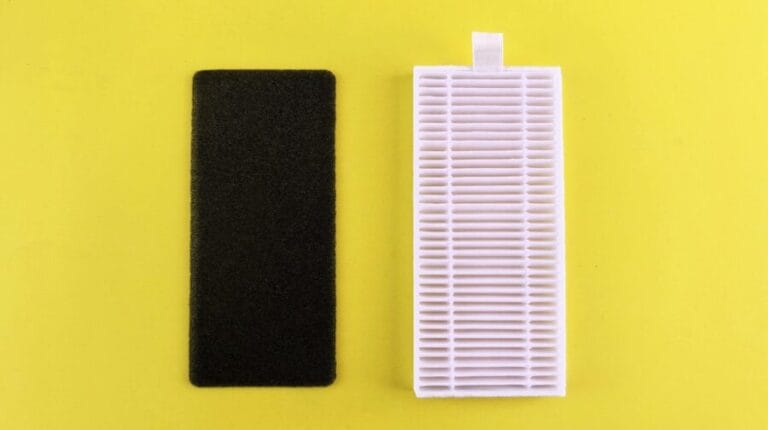
Honeywell True HEPA models rely heavily on pre-filters to capture larger particles. When pre-filters clog, airflow drops sharply and the motor works harder to compensate. Even with a new HEPA filter installed, a restricted pre-filter can reduce airflow by half.
Technicians disconnect power, remove all filters, and briefly test the unit without filters installed. If airflow returns to near-normal levels, the issue is confirmed as filter-related. At that point, the technician checks for warped aftermarket filters, incorrect filter orientation, or excessive dust buildup inside the intake grille.
On AirGenius models, washable ifD filters create a different problem. Owners often rinse them lightly but fail to remove fine particulate embedded in the mesh. This leaves airflow restricted even though the filter appears clean. Proper cleaning requires thorough drying and removal of embedded debris.
If airflow remains weak with filters removed, technicians inspect the fan impeller for dust accumulation. Fine household dust gradually coats the blades, reducing efficiency and throwing off balance.
Loud Rattling, Humming, or Grinding Noises
Noise complaints are the second most common Honeywell issue. These units typically become louder slowly, which causes many owners to ignore early warning signs.
Honeywell fan motors use bearings that wear over time, especially when airflow has been restricted for extended periods. Early bearing wear produces a low humming or buzzing noise. Advanced wear creates grinding or rattling that changes with fan speed.
Technicians remove filters and run the unit to isolate motor noise from airflow turbulence. If noise persists without filters, the motor shaft is checked for side-to-side play. Any detectable play usually confirms bearing wear.
Honeywell does not offer internal bearing kits. Once bearings are worn, the only proper repair is full motor replacement. In some cases, noise is caused by housing vibration rather than bearing failure. Technicians inspect motor mounts, grommets, and plastic housings for looseness before recommending motor replacement.
Unit Will Not Power On
Power failures in Honeywell air purifiers are often simpler than they appear. Many “dead” units still have intact motors and control boards.
Common causes include failed power switches, loose internal connectors, or damaged power cords near the strain relief. These issues are particularly common on models frequently moved between rooms.
Technicians disconnect power, open the housing, and perform continuity testing from the plug to the control board. If voltage reaches the board but the unit remains unresponsive, the board becomes suspect. If voltage is lost earlier, repairs are usually inexpensive.
This category of repair is often worthwhile, especially on units under five years old.
Unit Runs Constantly on High Speed
InSight series Honeywell models and some newer True HEPA units include air quality sensors that adjust fan speed automatically. When these sensors malfunction, the unit may run continuously at high speed or refuse to change speeds.
Dust intrusion into the sensor chamber is the most common cause. Technicians clean the sensor port using compressed air and inspect for residue buildup. If sensor readings remain inaccurate after cleaning, replacement is required.
Manual-speed-only Honeywell models experiencing similar symptoms usually have worn switches or failing control boards rather than sensor issues.
Filter Indicator Light Problems
Filter lights on Honeywell purifiers are timer-based, not performance-based. When they malfunction, it is usually due to control board logic errors rather than actual filter issues.
Technicians confirm the reset procedure is being performed correctly. If the light continues to stay on or fails to reset, the indicator circuit is evaluated. Because the purifier operates normally regardless of the indicator, repair is rarely recommended unless the unit is under warranty.
Many technicians advise tracking filter changes manually once this issue appears.
Burning Smell or Overheating Odors
A burning or electrical smell is one of the few Honeywell issues that requires immediate evaluation. Technicians disconnect power immediately and inspect airflow pathways, wiring insulation, and motor temperature.
In most cases, severely clogged filters or blocked vents cause the motor to overheat. Once airflow is restored, the smell resolves. If the odor persists after airflow correction, it usually indicates motor winding damage or insulation breakdown.
At that point, replacement is typically recommended due to safety concerns.
Random Shutoffs During Operation
Random shutdowns are usually caused by Honeywell’s built-in thermal protection circuits activating. When the motor overheats, the unit shuts down to prevent damage.
Technicians inspect airflow restriction first, followed by ambient room temperature and internal dust buildup. If shutdowns continue with clean airflow, the motor’s thermal sensor may be failing, which is not economically repairable.
Repeated thermal shutdowns significantly shorten remaining lifespan. Check out our full repair guide for Honeywell air purifier shutdowns.
Repair Cost Overview by Issue
The following table breaks down the cost of repair for the above issues.
| Issue | Likely Cause | Technician Repair Approach | Typical Cost |
|---|---|---|---|
| Weak airflow | Filter or dust restriction | Cleaning and correction | $0 – $120 |
| Loud noise | Bearing wear | Motor replacement | $150 – $350 |
| No power | Switch or wiring | Electrical repair | $60 – $150 |
| Speed stuck | Sensor or board | Sensor service | $90 – $180 |
| Overheating | Air restriction or motor | Cleaning or replacement | $0 – $300 |
Honeywell Model Differences That Matter for Repairs
Large-room Honeywell True HEPA models generally tolerate airflow restriction longer due to larger motors. Compact models fail faster when misused in oversized rooms. InSight series units experience more sensor-related issues due to additional electronics. AirGenius models reduce filter costs but require stricter cleaning discipline.
These differences explain why two Honeywell purifiers used in similar homes can age very differently.
Repair or Replace
Repairs usually make sense when the unit is under five years old and the issue involves airflow, switches, wiring, or sensors. These repairs restore performance without addressing major mechanical wear.
I routinely see Honeywell purifiers returned to normal operation with nothing more than airflow correction and electrical cleanup.
Motor failure, persistent overheating, and control board failures on older units usually justify replacement. Spending more than half the cost of a new purifier on repairs rarely makes sense, especially when filters are also due.
Not sure whether continued repairs are worthwhile? Our Repair or Replace Calculator helps frame the decision more clearly.
Honeywell air purifiers are generally reliable within their design limits (average lifespan is 5-10 years). Most failures are the result of airflow neglect rather than defective components. Addressing early symptoms often prevents costly failures later.