

When a Shark air purifier continues to smell bad despite running normally, the issue is almost never a motor, sensor, or control failure. In nearly every case, the root cause is exhausted carbon filtration or improper airflow through the filter assembly. This is one of the most misunderstood Shark air purifier problems because the unit appears to be working correctly. If your Shark unit has other issues, check out our full troubleshooting guide.
I see this complaint frequently, especially from owners who recently replaced a filter and expected immediate odor removal.
What This Problem Looks Like in Real Homes
The purifier powers on, airflow feels normal, and fan speeds respond correctly. However, cooking smells, pet odors, smoke, or musty air linger far longer than expected or never fully clear.
In some cases, the smell seems to come from the purifier itself rather than the room. That detail is important and often overlooked.
Why Shark Air Purifiers Stop Removing Odors
Odor control relies almost entirely on activated carbon, not the HEPA portion of the filter. HEPA captures particles. Carbon absorbs gases and smells. Once carbon is saturated, it cannot be “cleaned” or restored.
The most common causes include:
Carbon media saturation from cooking, pets, or smoke
Use of high airflow with limited carbon volume
Incorrect filter installation allowing air bypass
Extended use beyond the carbon’s effective lifespan
NeverChange filters are not immune. While the HEPA media may remain functional for years, carbon odor performance often declines much sooner.
How Technicians Diagnose Odor Issues
Diagnosis starts with airflow verification. Technicians confirm the fan is moving air evenly and that no internal obstructions exist.
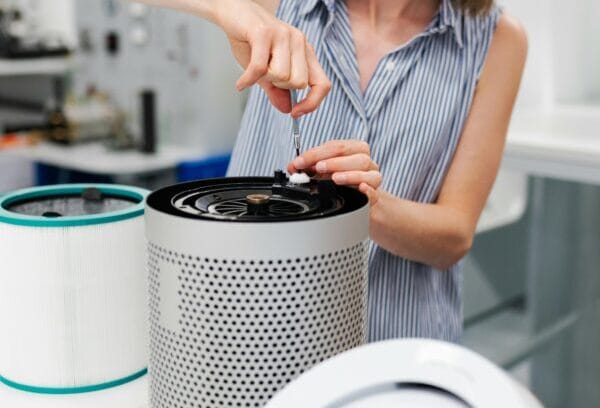
Next, power is disconnected and the filter assembly is removed. The carbon layer is inspected for discoloration and odor retention. A saturated carbon filter often emits the same smell it is supposed to remove.
Fitment is checked carefully. Even a small gap between the filter and housing allows air to bypass carbon media entirely, making odor control ineffective.
In many cases, the filter is technically “installed” but not sealed correctly.
When a Filter Change Does Not Fix the Problem
This surprises many owners. A new filter does not always solve odor issues if:
The replacement filter has minimal carbon
The filter is aftermarket with reduced odor media
Air bypass exists due to warped housing or misalignment
Odors originate from sources outside the purifier’s capacity
I have inspected Shark units where the filter was new but air was escaping around the edges, rendering the carbon layer useless.
Step-by-Step: How a Technician Resolves Shark Odor Problems
This is how a technician would handle the issue safely and methodically.
Initial Inspection
Power is disconnected before opening the unit. The technician removes the filter and inspects both the filter gasket and the housing seal surfaces.
Any dust buildup on sealing surfaces is cleaned to restore proper airflow routing.
Carbon Media Assessment
The carbon layer is evaluated for odor saturation. If the filter smells strongly when removed, it is no longer effective regardless of age.
Technicians never attempt to wash or deodorize carbon filters. Replacement is the only reliable solution.
Fitment Correction
The filter is reinstalled carefully, ensuring full contact around the perimeter. Any warped plastic guides or loose retaining clips are corrected if possible.
In some cases, foam sealing strips are added to restore airtight routing, depending on model design.
Operational Test
After reassembly, the unit is powered on and run at normal speed. Odor reduction is assessed over a short period to confirm airflow through the carbon layer is restored.
Typical Costs to Resolve Odor Issues
| Issue | Repair Action | Typical Cost |
|---|---|---|
| Carbon saturation | Filter replacement | $50 – $150 |
| Air bypass | Seal correction | $80 – $140 |
| Aftermarket filter | OEM filter replacement | $70 – $160 |
This is one of the least expensive Shark purifier issues to resolve, but only when diagnosed correctly.
Why This Problem Is So Common on Shark Air Purifiers
Shark designs emphasize high airflow relative to unit size. This improves particle removal but consumes carbon capacity faster than many owners expect.
Odor complaints rise sharply in homes with frequent cooking, pets, candles, or smoke exposure. In those environments, carbon lifespan is measured in months, not years.
Preventing Odor Problems Long-Term
Carbon filters should be replaced based on odor performance, not time alone. Waiting for indicator lights often leads to weeks or months of poor air quality.
Pre-filters should be kept clean to reduce carbon loading. Auto mode helps limit unnecessary airflow that accelerates saturation.
Odor problems almost never justify replacing the entire purifier. If airflow and electronics are functioning, correcting filtration restores performance in nearly all cases.
From a technician’s perspective, this is a maintenance correction, not a mechanical failure.
Takeaways
When a Shark air purifier smells bad, the unit itself is rarely broken. Carbon filtration is a consumable component, and once it is saturated or bypassed, no amount of runtime will fix the problem.
Correct diagnosis saves owners from unnecessary electrical repairs and restores odor control quickly and affordably. With proper care, Shark air purifiers typically last 5-10 years.
| Factor | Effect on Odor Control |
|---|---|
| Carbon saturation | Severe |
| Air bypass | Severe |
| Aftermarket filters | Moderate to severe |
| High cooking or smoke | Severe |