

Waste King Repair Costs
Most Waste King repair costs land between $70 and $220 depending on the technician rate, local labor pricing, and how much disassembly is required. Because these disposals use permanent-magnet motors, many failures relate to jams or stalls rather than burned windings, so parts are rarely the expensive part of the bill. Labor drives most of the cost, especially if the unit must be fully removed from the sink mount to reach seals, wiring, or mounting hardware. Tight cabinet layouts or rigid plumbing can add noticeable time even for otherwise simple fixes. Learn why we consider Waste King one of the best garbage disposal brands for longevity and low repair costs.
| Issue | Common Symptoms | Typical Repair Cost (Parts + Labor) |
|---|---|---|
| Jammed Rotor | Humming sound, no spin | $70–$110 |
| Motor Stall (Hum-No-Spin) | Overload trips, quiet buzzing | $90–$160 |
| Flange Leak | Drips at sink opening | $120–$180 |
| Bottom Housing Leak | Water under disposal body | $180–$220 (often replacement recommended) |
| Splash Guard Wear | Water splashing upward, odor | $70–$100 |
| Wiring/Connection Fault | No power, intermittent operation | $100–$180 |
| Misalignment/Vibration | Shaking, grinding noises | $90–$150 |
| Internal Corrosion | Loud startup, vibration | $150–$220 (may justify replacement) |
Issues That Lead to Repairs
The most frequent failures across the L-Series and Legend units are jammed rotors, slow flange leaks, and hum-without-spin motor stalls. Repair data suggests that long cooking waste sessions, starchy foods, and heavy fibrous scraps cause many of these problems over time. Some older disposals also develop internal corrosion on the grinding plate, which makes balancing issues more noticeable at startup and increases vibration during operation. Technicians often mention that once vibration rises sharply, debris is usually wedged somewhere in the chamber rather than a true motor failure. Learn more about common issues for Waste King Garbage Disposals and how to repair them.
Parts vs Labor Breakdown
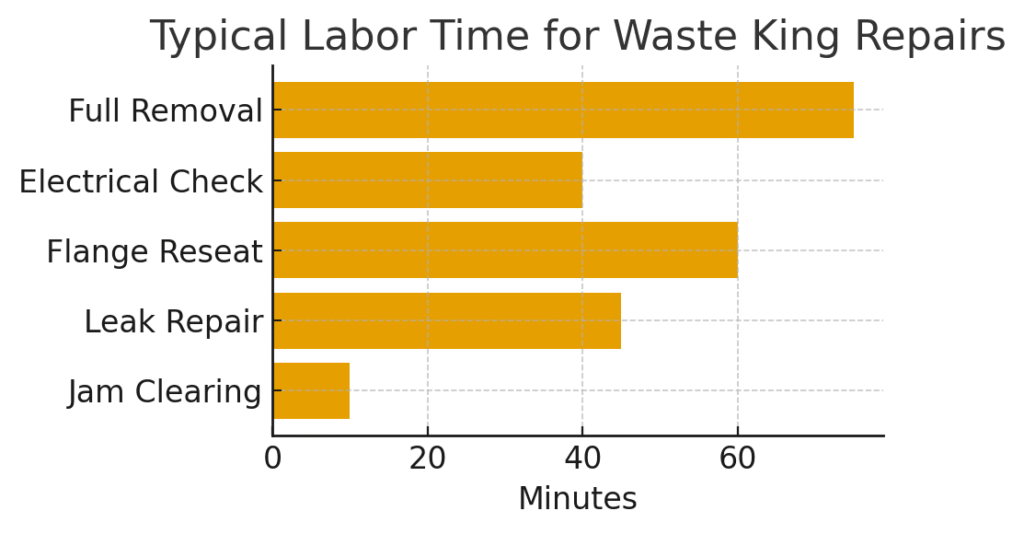
Most chamber seals, flanges, splash guards, and hardware pieces are inexpensive on their own, but accessing them takes time. A jam that can be freed through the bottom hex might take only minutes with no parts needed. By contrast, reseating a flange or correcting a long-term leak often means removing plumbing, the disposal body, and the mount hardware, which stretches labor into the higher end of the range.
Labor Time and Difficulty
Clearing a jam is usually under 15 minutes when access is good and the debris is obvious. Anything involving leaks, misalignment, or electrical access takes longer because the disposal must be supported and repositioned correctly. The Knight family tends to take slightly more time due to its heavier body and tighter fit under some sinks.
When a Repair Is Worth It
If the disposal is under eight to ten years old and the failure is limited to a stall, jam, or flange leak, repair is usually the economical option. Once the motor begins tripping the overload repeatedly even with a free plate, or water starts leaking from the bottom housing, replacement usually makes more sense than continued repairs.
DIY or Professional
Basic jam clearing is doable at home with the right tools and power safely disconnected. Reset-button trips and minor obstructions are common DIY fixes. Leak repairs, flange reseating, and anything involving electrical checks are better left to a technician. Incorrectly sealing the flange or mount can lead to long-term water damage under the sink, and parts suppliers note that many repeat service calls come from improper reinstallations rather than part failure itself.
Product Lifespan
See the average lifespan for this product.Recommended Alternatives/Replacements
This article may contain affiliate links, which allow us to earn a small commission at no extra cost to you.
Best Overall Option: InSinkErator Evolution Select
This unit offers balanced performance: quiet enough for open kitchens, strong enough for typical cooking waste, and built with stainless components that resist wear. Technicians often point out that the mounting system is easier than most to reseal.
Link to purchaseBest Budget Option: Waste King L-Series
A straightforward, no-frills disposal designed around fast motor speed rather than brute torque. It performs reliably on light to moderate loads, and belt-free construction means fewer internal points that can wear down.
Link to PurchaseBest Premium Option: InSinkErator Evolution Prestige
A robust, insulated disposal that keeps noise levels low while managing tougher scraps. The heavier build helps reduce vibration, and the upgraded chamber materials extend its usable life in busy kitchens.
Link to Purchase