
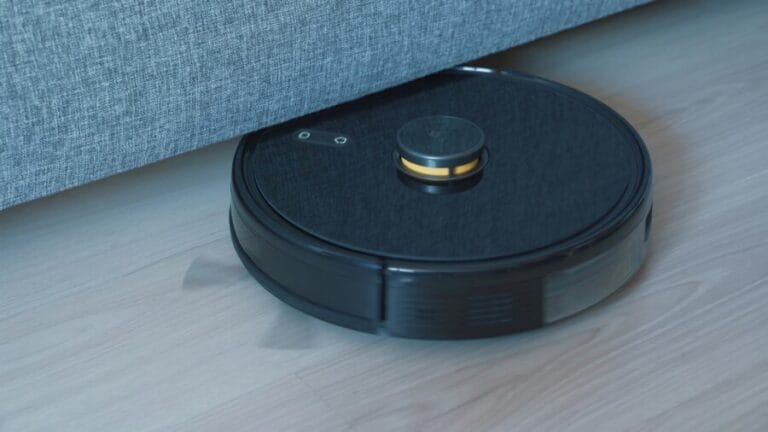

Roomba robot vacuum repair costs typically fall between $60 and $350, depending on the failed part, labor required, and model tier. Entry-level Roombas usually cost less to repair, while higher-end models with advanced navigation and stronger suction can be more expensive when major components fail.
In real-world service work, Roombas rarely fail all at once. Most repairs involve consumable or modular components that wear gradually. Understanding what technicians look for helps explain both pricing and whether a repair is economically reasonable.
Average Roomba Repair Cost Table
| Repair Part | Common Symptom | Typical Part Cost | Total Cost With Labor |
|---|---|---|---|
| Battery | Short runtime, won’t dock | $40 – $90 | $60 – $140 |
| Main brush module | Poor suction, loud noise | $25 – $60 | $90 – $180 |
| Side brush motor | Edge cleaning failure | $15 – $35 | $80 – $150 |
| Wheel module | Error messages, uneven movement | $30 – $80 | $120 – $220 |
| Vacuum motor | Weak or no suction | $60 – $120 | $180 – $300 |
| Cliff sensors | Stops randomly, won’t start | $20 – $50 | $100 – $180 |
| Charging contacts / dock | Won’t charge | $20 – $60 | $90 – $160 |
| Control board | Dead unit, random failures | $120 – $200 | $250 – $350 |
What Drives Roomba Repair Costs
Model Tier
Higher-end Roombas use more complex electronics and stronger motors. While they are more durable overall, individual part costs are higher compared to basic models.
Labor vs Parts
Most Roomba repairs are modular. Labor costs are often fixed and predictable, while parts account for most price variation. Battery and brush replacements are relatively quick; control board diagnostics take longer.
Age of the Unit
Older Roombas may still be repairable, but parts availability can affect cost. Some discontinued models rely on third-party components, which vary widely in quality.
Environment and Use
Pet hair, fine dust, and frequent runs accelerate wear on motors and bearings. Units from high-hair households show higher repair frequency.
Most Common Roomba Repairs Explained
Check out this article for a more in-depth look at these issues.
Battery Replacement
This is by far the most frequent repair. Technicians diagnose battery failure by checking charge retention and cycle completion. Most Roomba batteries last 1.5 to 3 years before capacity drops significantly. Replacement is usually cost-effective.
Brush and Extractor Repairs
Hair wrap and debris buildup cause bearing drag. Rubber extractors last longer than bristle brushes but still wear. These repairs restore suction performance and are among the best value fixes.
Wheel Module Replacement
Drive wheels contain integrated motors and encoders. When a Roomba spins in circles or throws movement errors, technicians typically replace the entire module rather than repair internals.
Vacuum Motor Failure
Motor failure is less common but more expensive. Reduced airflow, high-pitched noise, or overheating are typical indicators. This repair often determines whether replacement makes more sense.
Dirty or failed cliff sensors cause erratic stopping. Technicians clean and test sensors before replacement. Navigation boards on premium models are rarely repaired unless symptoms are severe.
When a Roomba Repair Is Worth It
From a service standpoint, Roomba repairs make sense when:
- The unit is under 4 years old
- Only one major component has failed
- Total repair cost is under 50 percent of replacement value
Battery, brush, and wheel repairs almost always justify repair. Control board or motor failures on older units often do not.
When Replacement Makes More Sense
Replacement is usually recommended when:
- Multiple systems fail at once
- Control board and motor both show faults
- Repair exceeds $300 on a mid-range unit
- Battery, wheels, and motor all show advanced wear
At that point, newer models offer better navigation, efficiency, and long-term value.
How Technicians Diagnose Roomba Failures
Technicians typically follow this sequence:
- Confirm error codes and runtime behavior
- Inspect brushes, wheels, and sensors for mechanical drag
- Test battery voltage and charging response (power is always disconnected before internal inspection)
- Measure motor airflow and current draw
- Isolate board-level faults last
This approach prevents unnecessary part replacement and keeps repair costs predictable.
Roomba Repair vs Manufacturer Service
iRobot offers mail-in repair and replacement programs on some models, but out-of-warranty pricing often exceeds independent repair costs. Third-party repairs using OEM-quality parts are common and generally reliable when done correctly.
Realistic Ownership Cost Over Time
Over a five-year ownership period, most Roomba owners should expect:
- One battery replacement
- Multiple brush and filter replacements
- Possible wheel or motor service in high-use homes
Total lifetime repair and maintenance costs typically land between $150 and $400, depending on usage.
Final Takeaway
Roomba vacuum repair costs are generally reasonable and predictable. Most failures involve modular components that can be replaced without full disassembly. As long as repairs stay below the $250–$300 range, fixing a Roomba is usually the smarter financial decision, especially for mid-range and premium models.
Frequently Asked Questions
How much does it usually cost to repair a Roomba?
Most Roomba repairs cost between $60 and $350 depending on the part and labor involved.
What is the most expensive Roomba repair?
Control board and vacuum motor replacements are typically the most expensive repairs.
Is battery replacement worth it?
Yes. Battery replacement is the most cost-effective repair and often restores full performance.
Do Roomba repairs require special tools?
Technicians use basic electronics tools and diagnostic software. Internal inspection always begins with disconnecting power.
Are third-party parts reliable?
OEM-quality third-party parts are widely used and generally reliable when sourced properly.